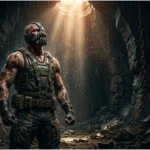
Mary Shelley wrote Frankenstein in 1818, when she was just 20 years old. Over 200 years later, the book still shapes how we talk about science, ambition, and what it means to be human. Below you’ll find 60 famous Frankenstein quotes, grouped by theme, with a short note on what each one means and why it still matters.
Shelley wrote two versions of the novel. The 1818 text is raw and direct. The 1831 edition, revised 13 years later, softens some of Victor’s choices and leans harder into fate. Most Frankenstein quotes you’ll see online, including the ones here, come from the widely read 1818 original.
Table of Contents
Frankenstein Quotes About Ambition, Knowledge, and Playing God
Victor Frankenstein is driven by one thing above all: the hunger to know what no one else knows. These Frankenstein quotes about ambition trace his slide from curious student to a man who oversteps every natural boundary.
“There is something at work in my soul, which I do not understand.” Victor says this before he fully understands his own obsession. It’s an early warning sign he ignores.
“Nothing is so painful to the human mind as a great and sudden change.” This line captures the shock of the novel’s central event, the moment Victor’s creation opens its eyes.
“How dangerous is the acquirement of knowledge and how much happier that man is who believes his native town to be the world, than he who aspires to become greater than his nature will allow.” This is Victor’s closing lesson to Robert Walton, the ship captain who frames the story. It’s the book’s clearest thesis statement.
“Of what strange nature is knowledge! It clings to a mind when it has once seized on it like a lichen on a rock.” Shelley compares knowledge to a parasite here, something that grows on you whether you want it or not.
“The world was to me a secret which I desired to divine.” Victor’s thirst for hidden truth starts long before he enters university.
“It was the secrets of heaven and earth that I desired to learn.” A young Victor explains his pull toward what he calls natural philosophy, the 18th-century term for science.
“I was surprised that, among so many men of genius who had directed their inquiries towards the same science, that I alone should be reserved to discover so astonishing a secret.” Victor’s pride shows through here. He believes he’s uniquely destined for discovery.
“So much has been done, exclaimed the soul of Frankenstein, more, far more, will I achieve.” This is Victor at his most reckless, treating past scientific progress as a personal challenge to beat.
“For this I had deprived myself of rest and health. I had desired it with an ardour that far exceeded moderation; but now that I had finished, the beauty of the dream vanished, and breathless horror and disgust filled my heart.” The moment the creature comes alive, Victor’s excitement collapses into regret. This single quote captures the entire arc of the novel.
“I had worked hard for nearly two years, for the sole purpose of infusing life into an inanimate body.” Victor states his goal plainly, years of secret, obsessive labor for one outcome.
“A human being in perfection ought always to preserve a calm and peaceful mind, and never to allow passion or a transitory desire to disturb his tranquillity.” Ironically, Victor says this about self-control while breaking every rule of it himself.
“Life and death appeared to me ideal bounds, which I should first break through, and pour a torrent of light into our dark world.” This quote shows Victor casting himself as a heroic figure, almost godlike, rather than a scientist making a mistake.
“No one can conceive the variety of feelings which bore me onwards, like a hurricane, in the first enthusiasm of success.” Shelley uses storm imagery here to show ambition as a force Victor can’t control, not a choice he’s making.
“I collected bones from charnel-houses and disturbed, with profane fingers, the tremendous secrets of the human frame.” This is one of the few places the novel gets specific about Victor’s methods, and it’s grim on purpose.
“Seek happiness in tranquillity, and avoid ambition, even if it be only the apparently innocent one of distinguishing yourself in science and discoveries.” Victor’s father gives him this advice early on. Victor doesn’t take it, and the whole novel is the result.
Frankenstein Quotes About Isolation, Rejection, and the Creature’s Humanity
The creature isn’t born evil. He’s born curious and gentle, then rejected by every person he meets, starting with his own creator. These famous quotes from the Creature in Frankenstein are some of the most quoted lines in the book, and they’re often the most misunderstood.
“How sweet is the affection of others to such a wretch as I am!” The creature says this after secretly watching a poor family show each other kindness. He longs for the same thing.
“I am malicious because I am miserable; am I not shunned and hated by all mankind?” This is arguably the creature’s central argument: his cruelty is a response to how he’s treated, not something he was made with.
“You, my creator, detest and spurn me, thy creature, to whom thou art bound by ties only dissoluble by the annihilation of one of us.” The creature points out that Victor has a responsibility to him, one Victor refuses to accept.
“I am alone and miserable; man will not associate with me.” A simple, direct line that sums up the creature’s entire existence.
“Everywhere I see bliss, from which I alone am irrevocably excluded.” He watches happiness happen around him constantly, but never gets to take part in it.
“I remembered Adam’s supplication to his Creator; but where was mine? He had abandoned me.” The creature compares himself to the biblical Adam, but notes that unlike Adam, he has no God who cares for him.
“Was I, then, a monster, a blot upon the earth, from which all men fled and whom all men disowned?” This rhetorical question shows the creature questioning his own nature, wondering if the world’s reaction to him is proof of something true.
“I am thy creature, and I will be even mild and docile to my natural lord and king, if thou wilt also perform thy part.” Early on, the creature is still willing to make peace with Victor if Victor will just meet him halfway.
“Believe me, Frankenstein, I was benevolent; my soul glowed with love and humanity.” He insists, more than once, that goodness was his starting point.
“I had feelings of affection, and they were requited by detestation and scorn.” A short, painful summary of every human interaction he’s had.
“Am I to be thought the only criminal, when all humankind sinned against me?” The creature turns the moral question back on society, and on Victor specifically.
“Cursed, cursed creator! Why did I live?” One of the rawest lines in the book, spoken in a moment of total despair.
“The fallen angel becomes a malignant devil. Yet even that enemy of God and man had friends and associates in his desolation; I am alone.” The creature says even Satan had companions. He has none.
“I was benevolent and good; misery made me a fiend. Make me happy, and I shall again be virtuous.” This line is often cited in discussions about nature versus nurture, one of the novel’s biggest themes.
“Increase of knowledge only discovered to me more clearly what a wretched outcast I was.” Unlike Victor, who sees knowledge as power, the creature finds that learning only deepens his pain.
Frankenstein Quotes About Revenge, Guilt, and Consequence
Once rejection turns to rage, the novel becomes a chase. These dark Frankenstein quotes show how guilt and vengeance consume both Victor and the creature until neither one can escape it.
“You can blast my other passions, but revenge remains, revenge, henceforth dearer than light or food!” The creature declares that revenge is now the only thing keeping him going.
“I will revenge my injuries; if I cannot inspire love, I will cause fear.” A chilling trade-off: if he can’t be loved, he’ll settle for being feared.
“I have love in me the likes of which you can scarcely imagine, and rage the likes of which you would not believe. If I cannot satisfy the one, I will indulge the other.” This quote shows the creature isn’t purely violent. He has real capacity for love, but it’s been denied so often that rage is what’s left.
“Nothing can alter my fate; listen to my history, and you will perceive how irrevocably it is determined.” The creature frames his violence as inevitable, almost like fate rather than choice.
“Once my fancy was soothed with dreams of virtue, of fame, and of enjoyment. Once I falsely hoped to meet with beings who, pardoning my outward form, would love me.” A rare glimpse of what the creature used to want, before repeated rejection changed him.
“My heart was fashioned to be susceptible of love and sympathy, and when wrenched by misery to vice and hatred, it did not endure the violence of the change without torture.” Even his turn toward hatred causes him pain. He doesn’t become cruel easily.
“Devil, do you dare approach me? And do not you fear the fierce vengeance of my arm wreaked on your miserable head?” Victor’s own words show that he, too, is capable of hatred and threats, not just the creature.
“I will pioneer a new way, explore unknown powers, and unfold to the world the deepest mysteries of creation.” Spoken earlier in the novel, this quote reads very differently once you know how much suffering follows it.
“For the first time, also, I felt what the duties of a creator towards his creature were, and that I ought to render him happy before I complained of his wickedness.” One of Victor’s only moments of real self-awareness, though it comes too late to change anything.
“I bore a hell within me, which nothing could extinguish.” Victor describes his guilt as a permanent, internal punishment, worse than anything anyone else could do to him.
“I felt the fiend’s grasp already in my neck, and struggled violently.” A moment of physical dread that mirrors Victor’s psychological terror throughout the book.
“Farewell! I leave you, and in you the last of humankind whom these eyes will ever behold.” The creature’s farewell after Victor’s death, marking the true end of their bond.
“My reign is not yet over. You live, and my power is complete.” A version of the threats the creature makes as he stalks Victor across Europe.
“Blasted as thou wert, my agony was still superior to thine, for the bitter sting of remorse will not cease to rankle in my wounds until death shall close them forever.” The creature’s final words about Victor, showing that even in “victory,” he feels no peace.
“Am I not alone, miserably alone? You, my creator, abhor me; what hope can I gather from your fellow-creatures?” A question that ties the revenge theme back to its root cause: total isolation.
Frankenstein Quotes About Love, Family, and Human Connection
Underneath the horror, Frankenstein is also a story about family bonds and what happens when they break down. These quotes from Frankenstein about love show a softer, more human side of the novel, and they’re often the best picks for essays, captions, or reflections on connection.
“Elizabeth, my love, you must supply my place to my younger children.” Victor’s mother says this on her deathbed, placing enormous responsibility on Elizabeth at a young age.
“The companions of our childhood always possess a certain power over our minds which hardly any later friend can obtain.” Victor reflects on the lasting pull of early friendships, especially his bond with Henry Clerval.
“How mutable are our feelings, and how strange is that clinging love we have of life even in the excess of misery!” Even in his darkest moments, Victor notices how strongly people cling to life and connection.
“It is true, we shall be monsters, cut off from all the world; but on that account we shall be more attached to one another.” The creature imagines a life with a companion, arguing that shared isolation could still lead to real love.
“Life, although it may only be an accumulation of anguish, is dear to me, and I will defend it.” A simple but powerful statement about the value of life, even a painful one.
“Heavy misfortunes have befallen us; but let us only cling closer to what remains, and transfer our love for those whom we have lost to those who yet live.” Alphonse Frankenstein’s advice to his grieving family after tragedy strikes.
“You may deem me romantic, dear sister, but I bitterly feel the want of a friend.” Captain Walton writes this to his sister early in the novel, before he even meets Victor.
“Even broken in spirit as he is, no one can feel more deeply than he does the beauties of nature.” Walton describes Victor after rescuing him, noting his depth of feeling despite everything he’s suffered.
“The starry sky, the sea, and every sight afforded by these wonderful regions, seems still to have the power of elevating his soul from earth.” Another line from Walton, showing how nature offers Victor small moments of relief.
“We are unfashioned creatures, but half made up.” Victor tells Walton that people need friendship and connection to become whole, a line that applies to the creature just as much as to any human character.
“No father could claim the gratitude of his child more completely than I did.” Victor speaks warmly about Alphonse, showing that his family life was genuinely loving before everything went wrong.
“I was not the only sufferer, for she endured a threefold more of misery than I did.” Victor acknowledges Elizabeth’s pain, one of his rare moments of thinking about someone else’s suffering as much as his own.
“She was docile and good-tempered, yet gay and playful as a summer insect.” Victor’s early description of Elizabeth, full of warmth and admiration.
“In a great large book we read of dreadful and evil deeds; but hers was ever the same, benevolent and kind to all.” A tribute to Elizabeth’s steady, generous character compared to the darker events around her.
“Beloved Clerval, how it grieves me to record thy untimely and unhappy death.” Victor’s grief over losing his closest friend, one of the clearest expressions of love in the entire novel.
FAQs
What is the most famous quote from Frankenstein?
The line most people associate with Frankenstein, “It’s alive!”, is not actually in Shelley’s novel. It comes from the 1931 film adaptation. Among real book quotes, “I was benevolent and good; misery made me a fiend” is one of the most cited.
Who says “I am malicious because I am miserable”?
The creature says this, not Victor. It’s one of his key arguments that his violence comes from years of rejection, not from being born evil.
What is Victor Frankenstein’s most important quote about ambition?
“How dangerous is the acquirement of knowledge and how much happier that man is who believes his native town to be the world, than he who aspires to become greater than his nature will allow.” Victor says this at the very end of his story, as a direct warning to Walton.
Is Frankenstein the monster or the doctor?
Victor Frankenstein is the scientist. The creature he builds is never given a name in the novel; he’s referred to as “the creature,” “the monster,” or “the fiend.” Calling the creature “Frankenstein” is a common mix-up, but it’s not accurate to Shelley’s text.
Conclusion
Frankensteinhas stayed relevant for over two centuries because it asks a question science still hasn’t fully answered: just because we can create something, does that mean we should? These 60 quotes show a story that’s less about a monster and more about what happens when responsibility gets ignored.
I’m Ava Grace, the voice behind CaptionsCap.com. I share funny, cute, and inspiring captions that brighten feeds, spark smiles, and make every post memorable. Words are my playground, and captions are my passion.