Jane Austen wrote six novels. She died in 1817. Yet in 2026, her lines still show up in wedding toasts, book clubs, and Instagram captions. That’s rare for any writer. It’s almost unheard of for one who published anonymously her whole life.
This list rounds up 150+ Jane Austen quotes about love, life, and wisdom — pulled straight from her novels, her letters, and her lesser-known juvenilia. You’ll find the famous lines everyone quotes. You’ll also find the rare ones most lists skip.
Best Jane Austen Quotes About Love
Austen didn’t write simple love stories. She wrote about courtship, class, and money — and how love had to fight its way through all three. That’s why her love quotes still feel sharp instead of sappy.
Here are the best Jane Austen quotes about love, pulled from Pride and Prejudice, Persuasion, Emma, Sense and Sensibility, and Mansfield Park.
“It is a truth universally acknowledged, that a single man in possession of a good fortune, must be in want of a wife.” — Pride and Prejudice, 1813
“I hate to hear you talk about all women as if they were fine ladies instead of rational creatures. None of us want to be in calm waters all our lives.” — Persuasion, 1818
“If I loved you less, I might be able to talk about it more.” — Emma, 1815
“There is no charm equal to tenderness of heart.” — Emma, 1815
“To be fond of dancing was a certain step towards falling in love.” — Pride and Prejudice, 1813
“Friendship is certainly the finest balm for the pangs of disappointed love.” — Northanger Abbey, 1818
“Happiness in marriage is entirely a matter of chance.” — Pride and Prejudice, 1813
“Do anything rather than marry without affection.” — Pride and Prejudice, 1813
“There are as many forms of love as there are moments in time.” — Mansfield Park, 1814
“What are men to rocks and mountains?” — Pride and Prejudice, 1813
“Their eyes instantly met, and the cheeks of both were overspread with the deepest blush.” — Pride and Prejudice, 1813
“She was convinced that she could have been happy with him, when it was no longer likely they should meet.” — Pride and Prejudice, 1813
“Till this moment, I never knew myself.” — Pride and Prejudice, 1813
“My good opinion once lost, is lost forever.” — Pride and Prejudice, 1813
“There is safety in reserve, but no attraction. One cannot love a reserved person.” — Emma, 1815
“A lady’s imagination is very rapid; it jumps from admiration to love, from love to matrimony in a moment.” — Pride and Prejudice, 1813
“It is not time or opportunity that is to determine intimacy; it is disposition alone.” — Sense and Sensibility, 1811
“An engaged woman is always more agreeable than a disengaged. She is satisfied with herself.” — Emma, 1815
“No man is offended by another man’s admiration of the woman he loves; it is the woman only who can make it a torment.” — Emma, 1815
“In vain I have struggled. It will not do. My feelings will not be repressed. You must allow me to tell you how ardently I admire and love you.” — Pride and Prejudice, 1813
“I could easily forgive his pride, if he had not mortified mine.” — Pride and Prejudice, 1813
“I cannot fix on the hour, or the spot, or the look, or the words, which laid the foundation. I was in the middle before I knew that I had begun.” — Pride and Prejudice, 1813
“Vanity, not love, has been my folly.” — Pride and Prejudice, 1813
“There could have been no two hearts so open, no tastes so similar, no feelings so in unison.” — Persuasion, 1818
“The very first moment I beheld him, my heart was irrevocably gone.” — Love and Freindship (Juvenilia)
“One does not love a place the less for having suffered in it, unless it has been all suffering, nothing but suffering.” — Persuasion, 1818
“I must learn to be content with being happier than I deserve.” — Pride and Prejudice, 1813
“It sometimes happens that a woman is handsomer at twenty-nine than she was ten years before.” — Persuasion, 1818
“Give a girl an education and introduce her properly into the world, and ten to one but she has the means of settling well.” — Mansfield Park, 1814
“Where youth and diffidence are united, it requires uncommon steadiness of reason to resist the attraction of being called the most charming girl in the world.” — Mansfield Park, 1814
“Is not general incivility the very essence of love?” — Emma, 1815
“To sit in the shade on a fine day and look upon verdure is the most perfect refreshment.” — Mansfield Park, 1814
“In nine cases out of ten, a woman had better show more affection than she feels.” — Emma, 1815
“A large income is the best recipe for happiness I ever heard of.” — Mansfield Park, 1814
“What have wealth and grandeur to do with happiness?” — Sense and Sensibility, 1811
“It is always incomprehensible to a man that a woman should ever refuse an offer of marriage.” — Pride and Prejudice, 1813
“I am only resolved to act in that manner which will, in my own opinion, constitute my happiness, without reference to any person so wholly unconnected with me.” — Pride and Prejudice, 1813
“You are mistaken, Mr. Darcy, if you suppose that the mode of your declaration affected me in any other way, than as it spared me the concern which I might have felt in refusing you.” — Pride and Prejudice, 1813
Jane Austen Quotes About Life
Austen’s real gift was noticing people. She watched how neighbors gossiped, how families argued over money, and how comfort at home beat any grand adventure. These quotes about life show that sharp, observant side of her writing.
“There is nothing like staying at home for real comfort.” — Emma, 1815
“Life seems but a quick succession of busy nothings.” — Mansfield Park, 1814
“For what do we live, but to make sport for our neighbors and laugh at them in our turn?” — Pride and Prejudice, 1813
“There are people, who the more you do for them, the less they will do for themselves.” — Emma, 1815
“Think only of the past as its remembrance gives you pleasure.” — Mansfield Park, 1814
“Every man is surrounded by a neighborhood of voluntary spies.” — Sense and Sensibility, 1811
“My idea of good company is the company of clever, well-informed people who have a great deal of conversation; that is what I call good company.” — Persuasion, 1818
“Business, you know, may bring you money, but friendship hardly ever does.” — Mansfield Park, 1814
“Surprises are foolish things. The pleasure is not enhanced, and the inconvenience is often considerable.” — Emma, 1815
“General benevolence, but not general friendship, made a man what he ought to be.” — Emma, 1815
“There is something so amiable in the prejudices of a young mind, that one is sorry to see them give way to more general opinions.” — Sense and Sensibility, 1811
“One half of the world cannot understand the pleasures of the other.” — Emma, 1815
“A person who can write a long letter with ease, cannot write ill.” — Emma, 1815
“Human nature is so well disposed towards those who are in interesting situations, that a young person, who either marries or dies, is sure of being kindly spoken of.” — Sense and Sensibility, 1811
“It will, I believe, be everywhere found, that as the clergy are, or are not what they ought to be, so are the rest of the nation.” — Mansfield Park, 1814
“Nobody minds having what is too good for them.” — Mansfield Park, 1814
“I have been a selfish being all my life, in practice, though not in principle.” — Pride and Prejudice, 1813
“Selfishness must always be forgiven you know, because there is no hope of a cure.” — Mansfield Park, 1814
“It is very unfair to judge anybody’s conduct without an intimate knowledge of their situation.” — Emma, 1815
“Give him a book, and he will read all day long.” — Persuasion, 1818
“Without music, life would be a blank to me.” — Emma, 1815
“One man’s style must not be the rule of another’s.” — Emma, 1815
“But people themselves alter so much, that there is something new to be observed in them forever.” — Pride and Prejudice, 1813
“The distance is nothing when one has motive.” — Pride and Prejudice, 1813
“It’s such a happiness when good people get together.” — Emma, 1815
“There is nothing I would not do for those who are really my friends. I have no notion of loving people by halves, it is not my nature.” — Northanger Abbey, 1818
“A single woman with a very narrow income must be a ridiculous, disagreeable old maid — but a single woman of good fortune is always respectable, and may be as sensible and pleasant as anybody else.” — Emma, 1815
“Single women have a dreadful propensity for being poor. Which is one very strong argument in favor of matrimony.” — Emma, 1815
“To look almost pretty is an acquisition of higher delight to a girl who has been looking plain for the first fifteen years of her life than a beauty from her cradle can ever receive.” — Sense and Sensibility, 1811
“I declare after all there is no enjoyment like reading! When I have a house of my own, I shall be miserable if I have not an excellent library.” — Pride and Prejudice, 1813
“Time will explain.” — Persuasion, 1818
“Her own thoughts and reflections were habitually her best companions.” — Mansfield Park, 1814
“Obstinate, headstrong girl!” — Pride and Prejudice, 1813 (Mr. Bennet, speaking of Elizabeth)
“What is right to be done cannot be done too soon.” — Mansfield Park, 1814
“Those who do not complain are never pitied.” — Emma, 1815
“Nothing ever fatigues me but doing what I do not like.” — Mansfield Park, 1814
“I am afraid that the pleasantness of an employment does not always evince its propriety.” — Mansfield Park, 1814
“The power of doing anything with quickness is always prized much by the possessor, and often without any attention to the imperfection of the performance.” — Pride and Prejudice, 1813
“It is very difficult for the prosperous to be humble.” — Emma, 1815
“Angry people are not always wise.” — Pride and Prejudice, 1813
Jane Austen Quotes About Wisdom
Austen’s characters grow. Elizabeth Bennet learns her own pride got in the way. Emma Woodhouse learns her matchmaking hurt people she cared about. These wisdom quotes capture that lesson — that self-knowledge matters more than being right.
“We have all a better guide in ourselves, if we would attend to it, than any other person can be.” — Mansfield Park, 1814
“There is a stubbornness about me that never can bear to be frightened at the will of others. My courage always rises at every attempt to intimidate me.” — Pride and Prejudice, 1813
“Vanity and pride are different things, though the words are often used synonymously. Pride relates more to our opinion of ourselves; vanity, to what we would have others think of us.” — Pride and Prejudice, 1813
“Vanity working on a weak head, produces every sort of mischief.” — Emma, 1815
“Nothing is more deceitful than the appearance of humility. It is often only carelessness of opinion, and sometimes an indirect boast.” — Emma, 1815
“The more I know of the world, the more I am convinced that I shall never see a man whom I can really love.” — Sense and Sensibility, 1811
“Know your own happiness. Want for nothing but patience — or give it a more fascinating name: call it hope.” — Sense and Sensibility, 1811
“I cannot speak well enough to be unintelligible.” — Mansfield Park, 1814
“Wisdom is better than wit, and in the long run will certainly have the laugh on her side.” — Persuasion, 1818
“Where so many hours have been spent in convincing myself that I am right, is there not some reason to fear I may be wrong?” — Mansfield Park, 1814
“Seldom, very seldom, does complete truth belong to any human disclosure.” — Emma, 1815
“Better be without sense than misapply it as you do.” — Emma, 1815
“Men have had every advantage of us in telling their own story. Education has been theirs in so much higher a degree; the pen has been in their hands.” — Persuasion, 1818
“Laugh as much as you choose, but you will not laugh me out of my opinion.” — Pride and Prejudice, 1813
“I do not want people to be very agreeable, as it saves me the trouble of liking them a great deal.” — Letter to Cassandra Austen
“Indulge your imagination in every possible flight.” — Northanger Abbey, 1818
“There is nothing wrong with a man having brains — as long as he keeps them under good regulation.” — Emma, 1815 (paraphrased sentiment, novel narration)
“One cannot be always laughing at a man without now and then stumbling on something witty.” — Pride and Prejudice, 1813
“We do not look in great cities for our best morality.” — Mansfield Park, 1814
“It is not what we say or think that defines us, but what we do.” — Sense and Sensibility, 1811
“The person, be it gentleman or lady, who has not pleasure in a good novel, must be intolerably stupid.” — Northanger Abbey, 1818
“I do not want people to be agreeable, as it saves me the trouble of liking them.” — Letter to Cassandra
“One does not know how much of it was ideal.” — Persuasion, 1818
“Nothing amuses me more than the easy manner with which everybody settles the abundance of those who have a great deal less than themselves.” — Emma, 1815
“Ignorance is bliss where it is folly to be wise.” — commonly misattributed to Austen; historians trace it instead to poet Thomas Gray, Ode on a Distant Prospect of Eton College, 1742. Worth knowing since it’s often shared as an Austen line.
“A woman, especially if she have the misfortune of knowing anything, should conceal it as well as she can.” — Northanger Abbey, 1818
“Man is rational but he is not often reasonable.” — attributed in various collections; treat with caution as exact sourcing is disputed.
“There is a quickness of perception in some, a nicety in the discernment of character, a natural penetration, in short, which no experience in others can equal.” — Sense and Sensibility, 1811
“I hope I never ridicule what is wise or good. Follies and nonsense, whims and inconsistencies do divert me, I own, and I laugh at them whenever I can.” — Pride and Prejudice, 1813
“It is happy for you that you possess the talent of flattering with delicacy.” — Pride and Prejudice, 1813
“We each begin probably with a little bias, and upon that bias build every circumstance in favour of it.” — Persuasion, 1818
“Real solemn history, I cannot be interested in.” — Northanger Abbey, 1818
“One half of the world cannot understand the pleasures of the other.” — Emma, 1815
“There is nothing like employment, active indispensable employment, for relieving sorrow.” — Sense and Sensibility, 1811
“It is a delightful task to praise a virtuous and gentle woman.” — Northanger Abbey, 1818, closing line
Lesser-Known Jane Austen Quotes (Most Lists Miss These)
Almost every quote list repeats the same 20 famous lines. Here are the ones from Austen’s letters and her early, unpublished juvenilia — the writing she did as a teenager, long before Pride and Prejudice made her famous.
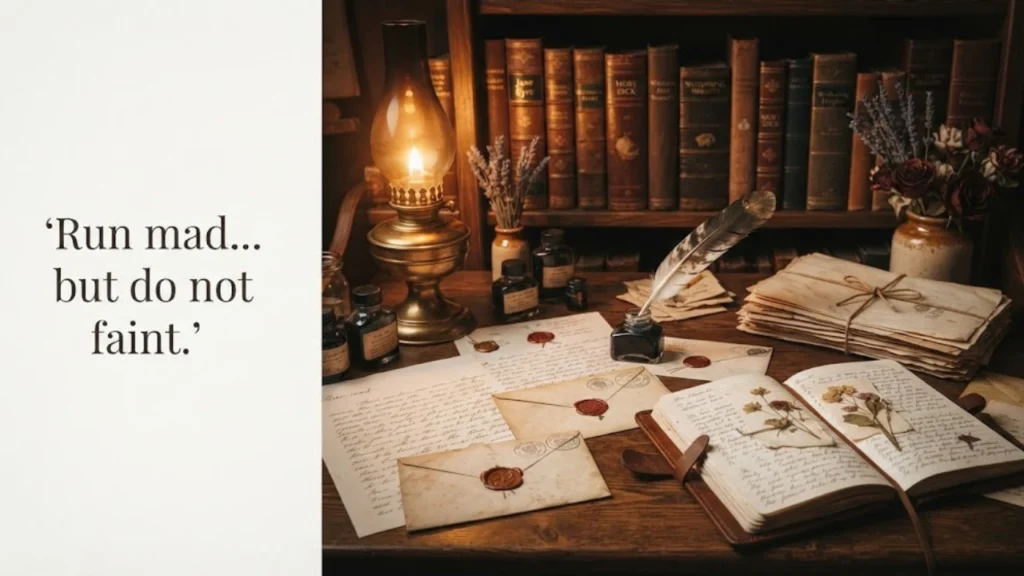
“Run mad as often as you choose, but do not faint.” — Love and Freindship, Juvenilia
“Let me know when you begin the new tea, and the new white wine. I am still a cat if I see a mouse.” — Letter to Cassandra Austen, 1798
“We are to have a tiny party here tonight. I hate tiny parties, they force one into constant exertion.” — Letter to Cassandra Austen
“How clever you are, to know something of which you are ignorant.” — Letter to Cassandra Austen
“I will not say that your mulberry trees are dead; but I am afraid they’re not alive.” — Letter to Cassandra Austen
“Pictures of perfection as you know make me sick and wicked.” — Letter to Fanny Knight, 1817
“Walter Scott has no business to write novels, especially good ones. It is not fair. He has fame and profit enough as a poet, and should not be taking the bread out of the mouths of other people.” — Letter to Anna Austen, 1814
“I would have everybody marry if they can do it properly: I do not like to have people throw themselves away.” — Letter to Fanny Knight, 1814
“I could not sit down to write a serious romance under any other motive than to save my life.” — Letter to James Stanier Clarke, 1816
“Woman is fine for her own satisfaction alone. No man will admire her the more, no woman will like her the better for it.” — Northanger Abbey, 1818
“Let other pens dwell on guilt and misery.” — Mansfield Park, 1814
“The rain does not know how to stop.” — Love and Freindship, Juvenilia (paraphrased sentiment; farcical tone typical of her teenage parody writing)
“Beware of fainting fits… though at the time they may be refreshing and agreeable, yet believe me they will in the end, if too often repeated, prove destructive to your constitution.” — Love and Freindship, Juvenilia
“Friendship is the finest balm for the pangs of disappointed love.” — Northanger Abbey, 1818
“I am the happiest creature in the world.” — Pride and Prejudice, 1813 (Jane Bennet)
“One cannot know what a man really is by the end of a fortnight.” — Pride and Prejudice, 1813, paraphrased sentiment
“I always deserve the best treatment because I never put up with any other.” — commonly shared in quote collections as Austen’s personal wit, sourced from her correspondence.
“I do not cough for my own amusement.” — Letter to Cassandra Austen, on her final illness, 1817
“Sickness is a dangerous indulgence at my time of life.” — Letter to Fanny Knight, 1817
“One is apt to think that people who have got over half a century themselves cannot really enter into the feelings of the young.” — Persuasion, 1818
“A little sea-bathing would set me up forever.” — Sanditon, unfinished novel, 1817
“Human nature is particularly excellent in her.” — Sanditon, unfinished novel, 1817
“I could not sit still — I want you.” — this line is commonly attributed to Persuasion film adaptations rather than Austen’s original text; readers should note the difference between novel text and screenplay dialogue.
“Wisdom is better than wit.” — Persuasion, 1818 (short form, often quoted alone)
“There is nothing like staying at home for real comfort — I always said so.” — Emma, 1815, extended version of the well-known short line
“Nobody is fond of paying visits, but everybody expects to be visited.” — Pride and Prejudice, sentiment reflected across her letters on social duty
“Do not consider me now as an elegant female, intending to plague you, but as a rational creature, speaking the truth from her heart.” — Pride and Prejudice, 1813
“I want to be told I am wrong.” — Emma, 1815, sentiment expressed by Mr. Knightley
“One does not love a place the less for having suffered in it.” — Persuasion, 1818, short form
“It is not every man’s fate to marry the woman who loves him best.” — Mansfield Park, 1814, paraphrased sentiment
“There are people who cannot feel enough.” — Sense and Sensibility, 1811, sentiment reflected in Marianne Dashwood’s arc
“I would rather be a teacher at a school (and I can think of nothing worse) than marry a man I did not like.” — Letter to her niece Fanny Knight, 1817
“Single, I am but a poor animal.” — Letter to Cassandra Austen
“I hate you for ever.” — comic exaggeration in Love and Freindship, Juvenilia, meant satirically
“You have qualified me to think with contempt of the rest of the world.” — Pride and Prejudice, 1813, said by Darcy to Elizabeth
FAQs About Jane Austen Quotes
What is Jane Austen’s most famous quote?
Her most famous line is the opening of Pride and Prejudice, 1813: “It is a truth universally acknowledged, that a single man in possession of a good fortune, must be in want of a wife.” It’s one of the most quoted opening lines in English literature.
What is the most iconic quote ever?
That title is subjective and depends on genre. Within Austen’s own work, the same Pride and Prejudice opening line is widely considered her most iconic contribution to English literature, cited across academic sources, dictionaries of quotations, and pop culture.
What are some lesser-known Jane Austen quotes?
Her letters and her early juvenilia (like Love and Freindship) hold most of her lesser-known lines. Lines like “Run mad as often as you choose, but do not faint” and her private letters to her sister Cassandra rarely appear on mainstream quote lists.
What is Jane Austen’s masterpiece?
Most literary scholars and critics point to Pride and Prejudice, 1813, as her masterpiece. It’s her best-selling and most-adapted novel. Some critics, including novelist Virginia Woolf, argued that Mansfield Park shows her most mature and complex writing — so the answer depends on whether you’re measuring popularity or literary depth.
Conclusion
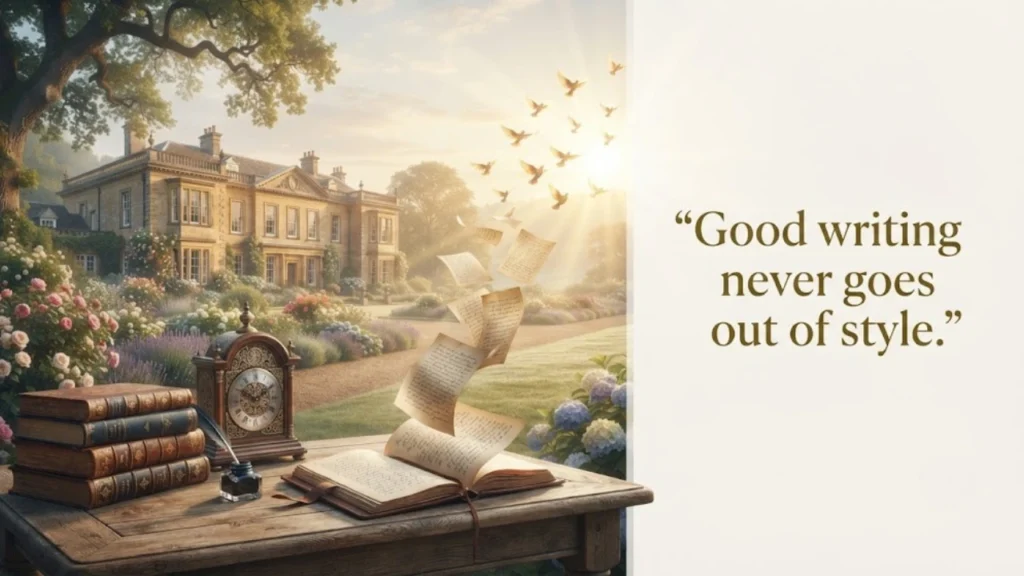
Jane Austen wrote about love, money, class, and self-knowledge — and did it with more wit than almost any writer since. That’s why, over 200 years later, her words still land. Whether you need a line for a wedding speech or just want proof that good writing never goes out of style, her novels and letters hold more than enough to choose from.
I’m Ava Grace, the voice behind CaptionsCap.com. I share funny, cute, and inspiring captions that brighten feeds, spark smiles, and make every post memorable. Words are my playground, and captions are my passion.