Some ideas never really get old. John Locke wrote about freedom, power, and the human mind over 300 years ago, yet his words still show up in courtrooms, classrooms, and even the Declaration of Independence.
This list rounds up the 50 best John Locke quotes on freedom, government, and human nature, grouped by theme and explained in plain, simple language — so you get the meaning, not just the words.
Table of Contents
Who Was John Locke?
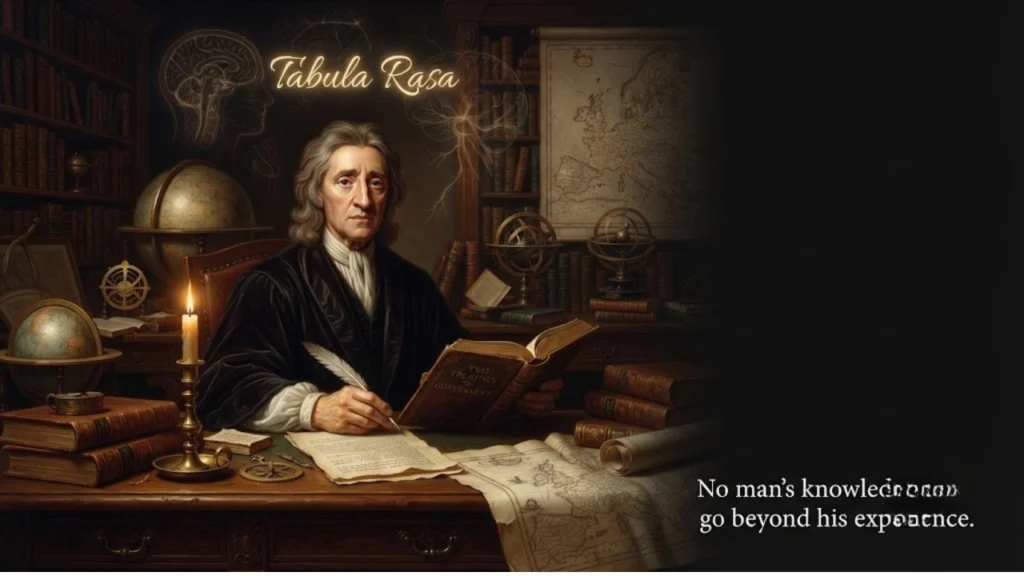
John Locke (1632–1704) was an English philosopher, physician, and political thinker, widely known today as the “Father of Classical Liberalism.” He believed the human mind starts as a blank slate, or tabula rasa, shaped entirely by experience rather than born-in ideas.
His two biggest works, Two Treatises of Government and An Essay Concerning Human Understanding, laid out ideas about natural rights, consent of the governed, and how we actually come to know things. Locke’s writing directly influenced Thomas Jefferson, James Madison, and the language used in the U.S. Constitution. That’s a big reason his quotes on freedom, government, and human nature still get quoted by lawyers, teachers, and writers today.
50 Best John Locke Quotes on Freedom, Government & Human Nature
Locke didn’t write in neat, quotable one-liners on purpose — most of these lines come from dense philosophical books. Below, each quote is grouped by topic and given a short, easy to understand explanation so the meaning is clear at a glance.
Quotes on Freedom & Liberty
Locke believed freedom wasn’t just doing whatever you want — it meant living under fair laws that protect your rights. These quotes explain that idea in his own words.
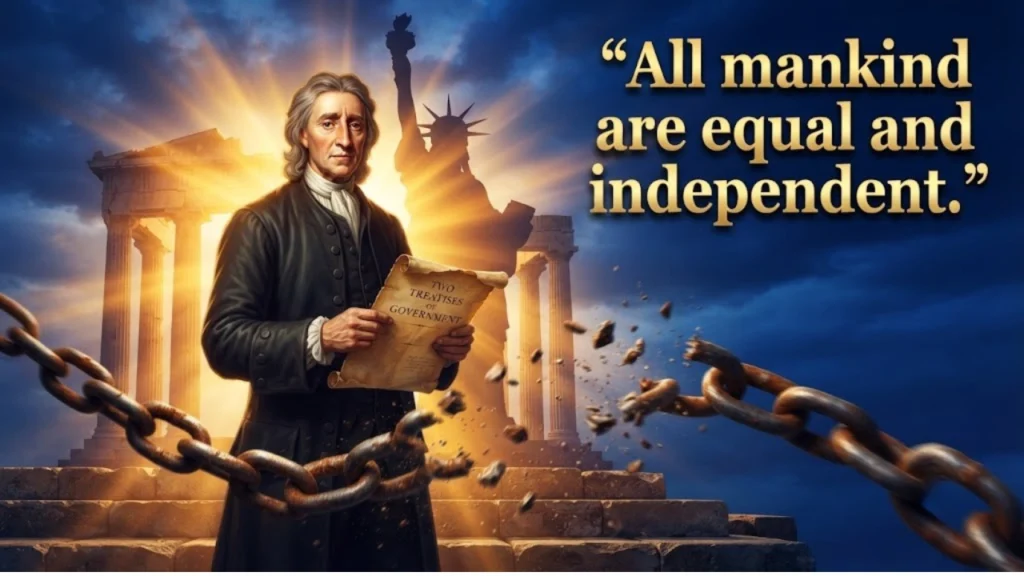
“All mankind…being all equal and independent, no one ought to harm another in his life, health, liberty, or possessions.” Every person, Locke says, has an equal claim to safety and freedom — no exceptions based on wealth or status.
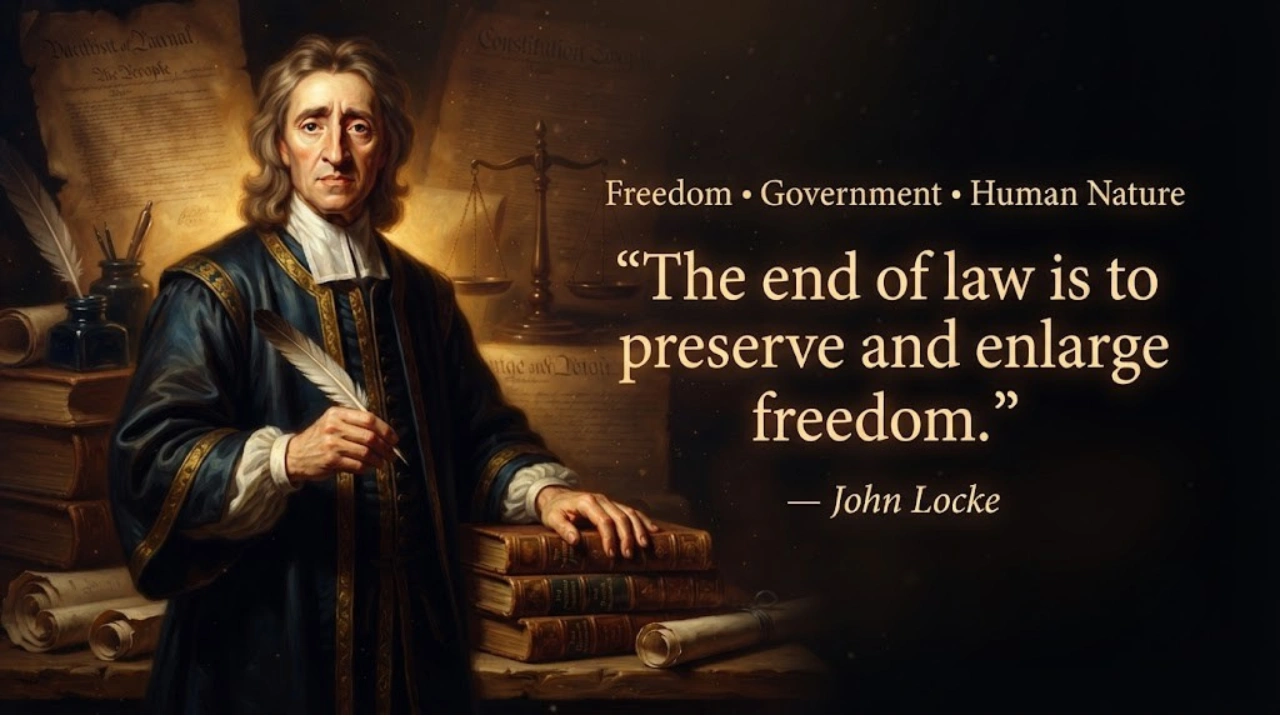
“The end of law is not to abolish or restrain, but to preserve and enlarge freedom.” Good laws don’t cage people in — they protect the room people need to live freely.
“Revolt is the right of the people.” When a government stops protecting its people, Locke believed citizens had the right to push back.
“Men being, as has been said, by nature, all free, equal and independent, no one can be put out of this estate, and subjected to the political power of another, without his own consent.” No one can be ruled without agreeing to it first — the basis of government by consent.
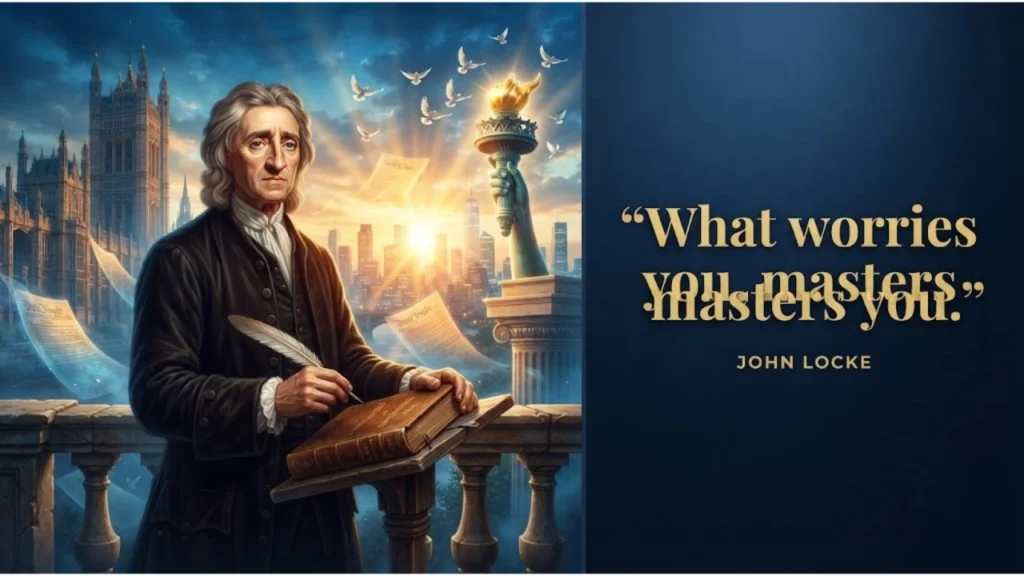
“What worries you, masters you.” Fear and anxiety can control a person just as much as any ruler or law.
“The most precious of all possessions is power over ourselves.” Self-control, to Locke, was the deepest form of liberty anyone could hold.
“Every man has a property in his own person. This nobody has a right to, but himself.” You own yourself first — this idea became the root of Locke’s whole theory of property rights.
“The discipline of desire is the background of character.” Managing your own wants, not chasing every impulse, is what builds real strength.
“The only fence against the world is a thorough knowledge of it.” Understanding how the world works is the best protection anyone can have.
“A sound mind in a sound body, is a short, but full description of a happy state in this World.” Physical and mental health together, Locke says, are close to the whole recipe for a good life.
“Our incomes are like our shoes; if too small, they gall and pinch us; but if too large, they cause us to stumble and to trip.” Balance matters — too little or too much of anything causes problems.
“Fashion for the most part is nothing but the ostentation of riches.” A sharp jab at people who chase trends just to show off wealth.
“It is of great use to the sailor to know the length of his line, though he cannot with it fathom all the depths of the ocean.” You don’t need to know everything to make good use of what you do know.
“There cannot be greater rudeness than to interrupt another in the current of his discourse.” Basic respect, Locke believed, starts with simply letting people finish talking.
“To love our neighbor as ourselves is such a truth for regulating human society, that by that alone one might determine all the cases in social morality.” One simple rule, applied honestly, could settle most moral questions in society.
“Fortitude is the guard and support of the other virtues.” Courage is the backbone that holds every other good trait in place.
“To love truth for truth’s sake is the principal part of human perfection in this world, and the seed-plot of all other virtues.” Honesty with yourself, Locke argued, is where every other virtue grows from.
Quotes on Government & Power
Locke’s ideas on government center on one core belief: power exists to protect people, not control them. These quotes lay out his thinking on property, consent, and the limits of authority.
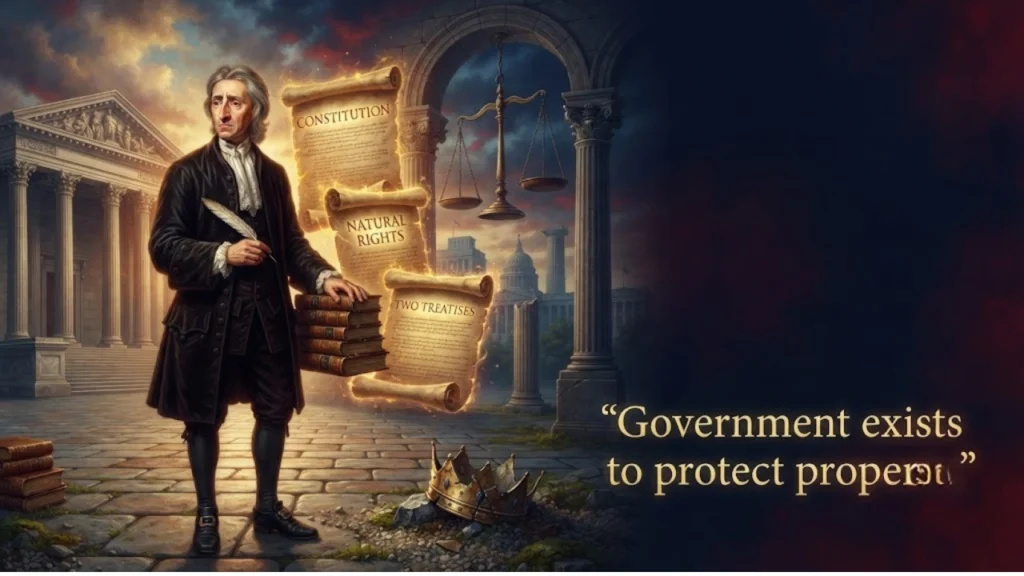
“Government has no other end but the preservation of property.” For Locke, the entire job of government came down to protecting what people had rightfully earned.
“All wealth is the product of labor.” Value comes from work — a foundational idea behind Locke’s labor theory of property.
“The reason why men enter into society is the preservation of their property.” People agree to live under laws mainly to keep what’s theirs safe.
“Where there is no property there is no injustice.” Without ownership, Locke argued, there’s nothing concrete to violate in the first place.
“Parents wonder why the streams are bitter, when they themselves have poisoned the fountain.” Problems in society often trace straight back to the people in charge of raising it.
“It is easier for a tutor to command than to teach.” Barking orders is simple; real guidance takes far more effort — a jab often aimed at bad leadership.
“An excellent man, like precious metal, is in every way invariable; a villain, like the beams of a balance, is always varying, upwards and downwards.” Good character stays consistent; corrupt character shifts depending on what benefits it.
“The dread of evil is a much more forcible principle of human actions than the prospect of good.” People, Locke noticed, are moved more by fear of bad outcomes than by hope for good ones.
“All men are liable to error; and most men are, in many points, by passion or interest, under temptation to it.” Even the smartest people make mistakes when emotion or self-interest gets involved.
“Nature never makes excellent things for mean or no uses.” Everything of real value, Locke believed, has a genuine purpose behind it.
“New opinions are always suspected, and usually opposed, without any other reason but because they are not already common.” People resist new ideas simply because they’re unfamiliar, not because they’re wrong.
“As people are walking all the time, in the same spot, a path appears.” Repetition creates habits — in society and in the mind alike.
“The Bible is one of the greatest blessings bestowed by God on the children of men.” Locke, a religious man himself, viewed scripture as a moral cornerstone for just government and society.
“We are like chameleons; we take our hue and the color of our moral character, from those who are around us.” The people around us shape our values more than we usually admit.
“One unerring mark of the love of truth is not entertaining any proposition with greater assurance than the proofs it is built upon will warrant.” Real honesty means never being more confident than the evidence actually allows.
“To prejudge other men’s notions before we have looked into them is not to show their darkness but to put out our own eyes.” Dismissing an idea before understanding it only blinds the person doing the dismissing.
“Things of this world are in so constant a flux, that nothing remains long in the same state.” Change is the only constant — governments, ideas, and people included.
Locke’s theory of human nature rests on empiricism — the idea that everything we know comes from experience, not instinct. These quotes cover how he saw the mind, learning, and truth.
“No man’s knowledge here can go beyond his experience.” You can’t truly know something you’ve never actually experienced or observed.
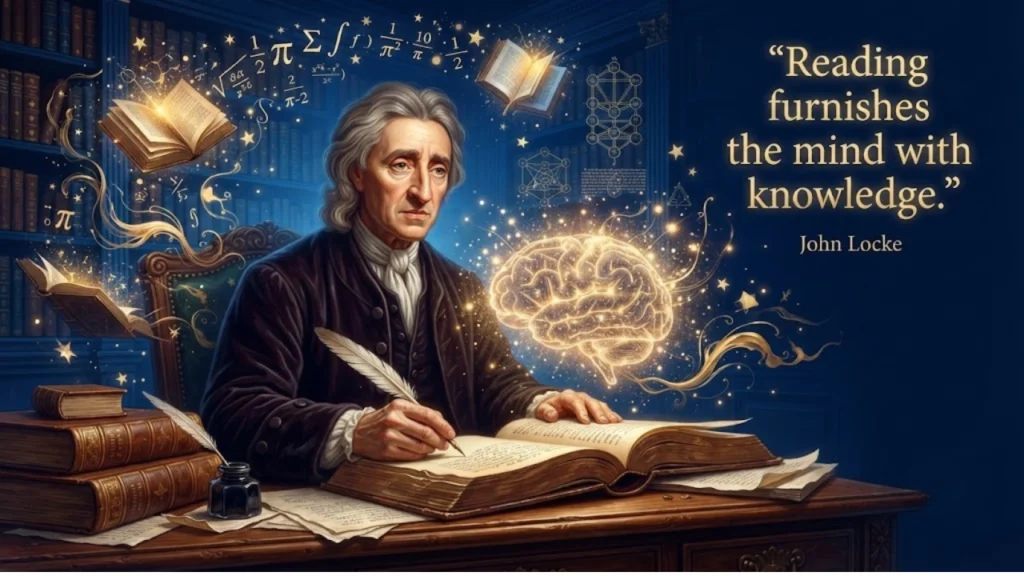
“Reading furnishes the mind only with materials of knowledge; it is thinking that makes what we read ours.” Reading gives you the raw material — actual understanding takes real thought.
“Nothing is in the intellect that was not first in the senses.” The foundation of Locke’s empiricism: all knowledge starts with sensory experience.
“I have always thought the actions of men the best interpreters of their thoughts.” What people do reveals more truth than what they say.
“It is one thing to show a man that he is in an error, and another to put him in possession of the truth.” Pointing out a mistake isn’t the same as actually teaching someone the right answer.
“There is frequently more to be learned from the unexpected questions of a child than the discourses of men.” A child’s honest curiosity often uncovers more than a grown adult’s polished argument.
“Reverie is when ideas float in our mind without reflection or regard of the understanding.” Daydreaming, Locke says, is thought without real direction or focus.
“We should have a great fewer disputes in the world if words were taken for what they are, the signs of our ideas only, and not for things themselves.” Many arguments happen simply because people confuse words with the actual things they represent.
“Education begins the gentleman, but reading, good company and reflection must finish him.” Formal schooling only starts the job — real growth needs good influence and self-reflection too.
“The improvement of understanding is for two ends: first, our own increase of knowledge; secondly, to enable us to deliver that knowledge to others.” Learning matters both for yourself and for what you can pass on to others.
“Where all is but dream, reasoning and arguments are of no use, truth and knowledge nothing.” Without a shared grip on reality, logic and facts lose all their power.
“I attribute the little I know to my not having been ashamed to ask for information.” Locke credited his own knowledge to something simple: never being too proud to ask questions.
“Few men think, yet all will have opinions. Hence men’s opinions are superficial and confused.” Having an opinion is easy; actually thinking one through is rare.
“Our Business here is not to know all things, but those which concern our conduct.” Knowledge is most useful when it’s aimed at how we actually live and act.
“The thoughts that come often unsought, and, as it were, drop into the mind, are commonly the most valuable of any we have.” Some of our best ideas arrive unplanned, almost by accident.
“Our deeds disguise us… But every day, every hour, rushes by. There is no time.” We’re often too rushed by life to fully understand ourselves through our own actions.
What John Locke’s Quotes Teach Us About Freedom, Government & Human Nature
Read together, these 50 John Locke quotes point to one consistent worldview. Freedom only works when it’s protected by fair law, not the absence of law. Government exists purely to serve people — through consent, not force. And human nature, in Locke’s eyes, is shaped almost entirely by experience, reflection, and the company we keep.
This is exactly why Locke’s fingerprints are all over the U.S. Declaration of Independence and the broader idea of natural rights — life, liberty, and property. His concept of the social contract still shows up in modern debates about civil rights, consent, and the limits of state power.
FAQs
What was John Locke’s most famous quote?
Locke’s most widely cited line is “Government has no other end but the preservation of property.” It’s the clearest, shortest summary of his entire political philosophy — that government exists to protect what people rightfully own, including their life, liberty, and property.
What are 10 famous quotes?
Ten of Locke’s most quoted lines include: “No man’s knowledge here can go beyond his experience,”“What worries you, masters you,”“Government has no other end but the preservation of property,”“All mankind…being all equal and independent, no one ought to harm another,”“Reading furnishes the mind only with materials of knowledge,”“New opinions are always suspected, and usually opposed,”“Nothing is in the intellect that was not first in the senses,”“We are like chameleons,”“Revolt is the right of the people,” and “The end of law is not to abolish or restrain, but to preserve and enlarge freedom.”
What did John Locke famously write?
Locke’s two most famous works are Two Treatises of Government (1689), which laid out his theory of natural rights and government by consent, and An Essay Concerning Human Understanding (1689), where he introduced the idea of the mind as a tabula rasa, or blank slate.
What is John Locke most famous for?
Locke is best known as the “Father of Classical Liberalism” and for shaping the modern idea of natural rights — life, liberty, and property. His work directly influenced the U.S. Declaration of Independence and the structure of constitutional government built on the consent of the governed.
Conclusion
John Locke’s ideas on freedom, government, and human nature were written centuries ago, but they still shape how modern democracies think about rights and power. These 50 quotes capture a mind that valued reason, honesty, and personal liberty above almost everything else — which is exactly why people still turn to them today.
I’m Ava Grace, the voice behind CaptionsCap.com. I share funny, cute, and inspiring captions that brighten feeds, spark smiles, and make every post memorable. Words are my playground, and captions are my passion.